Introduction
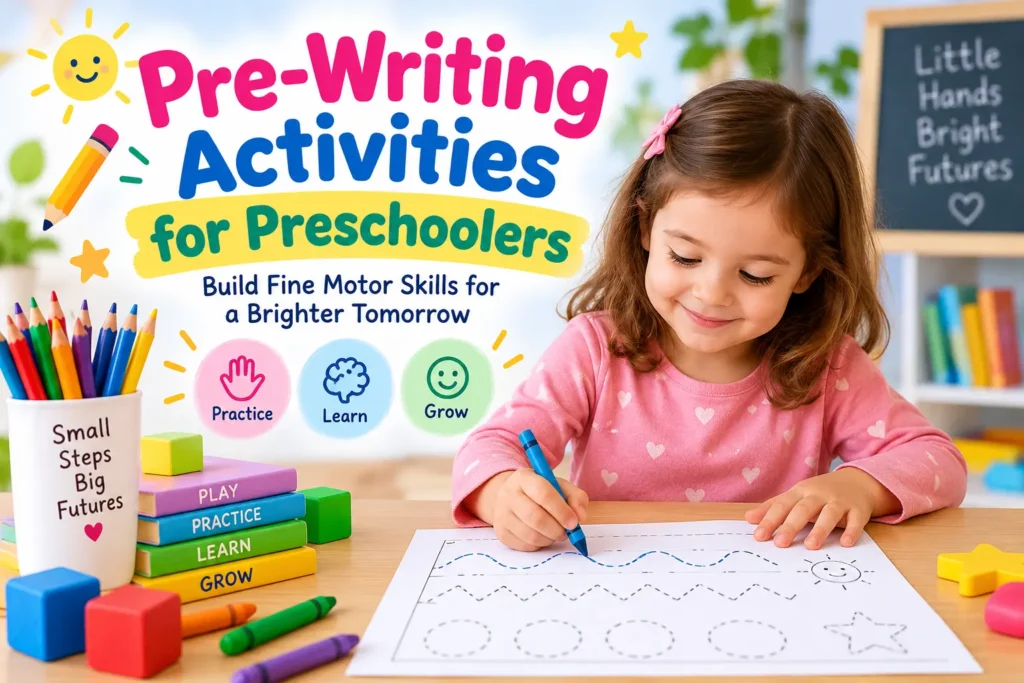
Developing strong pencil control is an important step in helping preschoolers prepare for writing. Before children begin forming letters and numbers, they need opportunities to practice controlling their hands, fingers, and pencils through simple and enjoyable movements. Pre-writing activities for preschoolers can help strengthen fine motor skills, improve hand-eye coordination, and build the confidence children need for early writing.
There are many fun pencil control activities for preschoolers that can be introduced at home or in the classroom. Children can practice tracing lines, curves, zigzags, patterns, shapes, and paths while developing greater control and accuracy. These activities allow children to learn through play and practice important writing movements without feeling pressured to form letters before they are ready.
In this article, we will explore a variety of fun pre-writing activities for preschoolers, along with simple fine motor activities and pre-writing worksheets for preschoolers. With regular practice and encouragement, parents and teachers can help children develop essential pre-writing skills and become more comfortable with the movements needed for early writing.
Importance of Pre-Writing Activities for Pencil Control
Pre-writing activities play an important role in helping preschoolers develop the skills they need before they begin writing letters and numbers. At this stage, children are still learning how to control their hands, fingers, and pencils. Regular practice with simple pencil control activities can strengthen fine motor skills, improve coordination, and make early writing feel more comfortable.
These activities do not need to be complicated. Tracing, drawing, connecting dots, and following different paths give children enjoyable opportunities to practice their pre-writing skills. With patient guidance and regular practice, children can gradually develop better control, accuracy, and confidence while preparing for early writing.
Development of Fine Motor Skills
Fine motor skills involve the small movements of the hands and fingers that children use for everyday tasks, including holding and controlling a pencil. Fine motor activities for preschoolers help strengthen these small muscles and improve the finger control children need for drawing and early writing.
Simple activities such as tracing lines, drawing patterns, playing with playdough, threading beads, and using child-safe tweezers encourage children to use their hands and fingers in different ways. As these skills develop, children may find it easier to hold a pencil comfortably and make more controlled movements on paper. Regular fine motor skills activities can also help children build the strength and coordination needed for future writing tasks.
Preparation for Writing
Before children are ready to write letters and numbers, they need to practice making different types of marks and controlling the direction of their pencil. Straight lines, curves, zigzags, shapes, and simple patterns give children a chance to practice these movements in a relaxed and enjoyable way.
These preschool writing activities introduce children to some of the basic movements used in handwriting. Starting with simple activities and gradually increasing the difficulty can help children improve their pencil control and build confidence without making early writing practice feel overwhelming.
Enhancing Hand-Eye Coordination
Hand-eye coordination helps children guide their pencil while watching where it moves on the page. This skill is important for tracing, drawing, writing, and other activities that require children to control their hand movements accurately.
Activities such as tracing paths, completing simple mazes, connecting dots, and following patterns encourage children to coordinate what they see with how they move their hands. Regular hand-eye coordination activities can help improve pencil control, accuracy, and confidence while giving preschoolers enjoyable opportunities to practice their early writing skills.
Types of Pre-Writing Activities
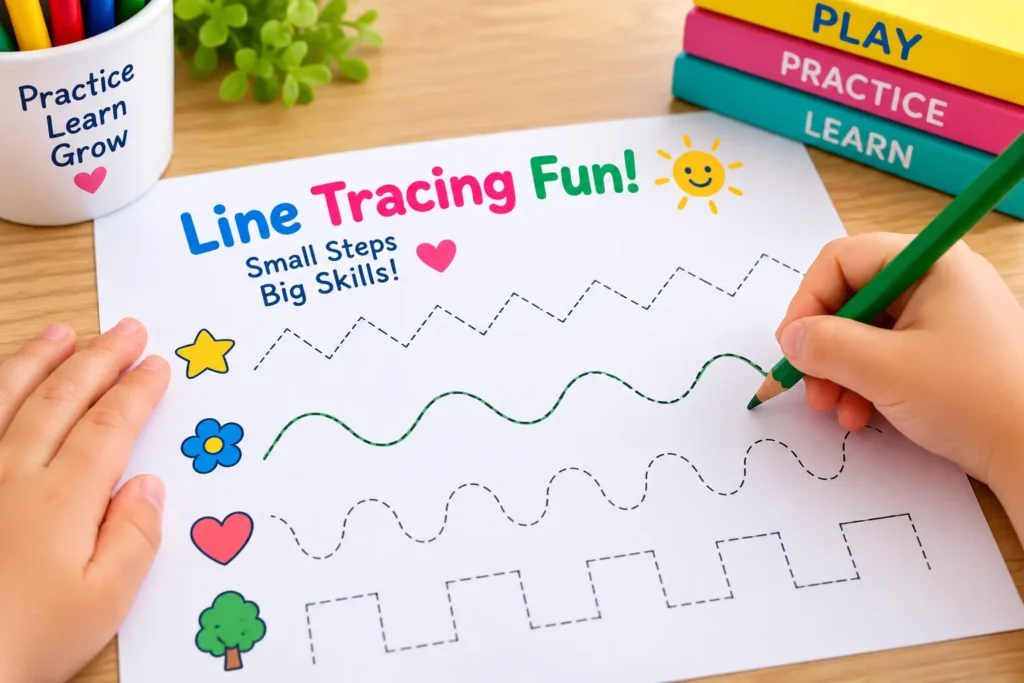
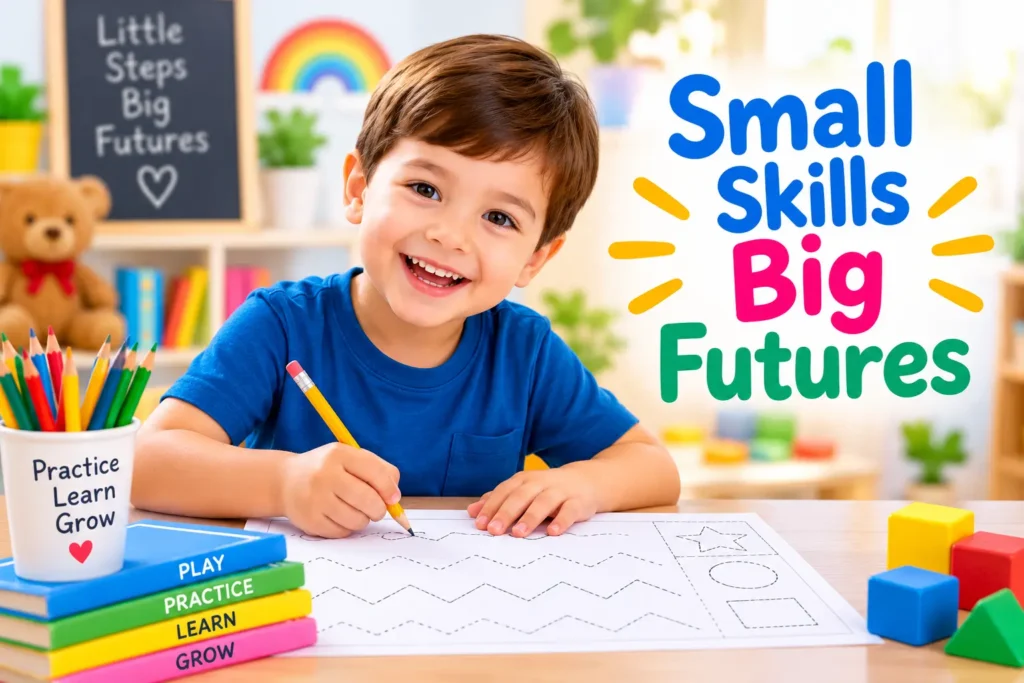
There are many different pre-writing activities for preschoolers, and each one gives children an opportunity to practice a specific type of pencil movement. Starting with simple activities and gradually introducing more challenging ones can help children develop their skills at a comfortable pace. The activities below include lines, curves, zigzags, patterns, shapes, paths, mazes, and dot-to-dot exercises. Together, they provide a variety of ways for children to practice pencil control while keeping learning enjoyable.
Line Activities
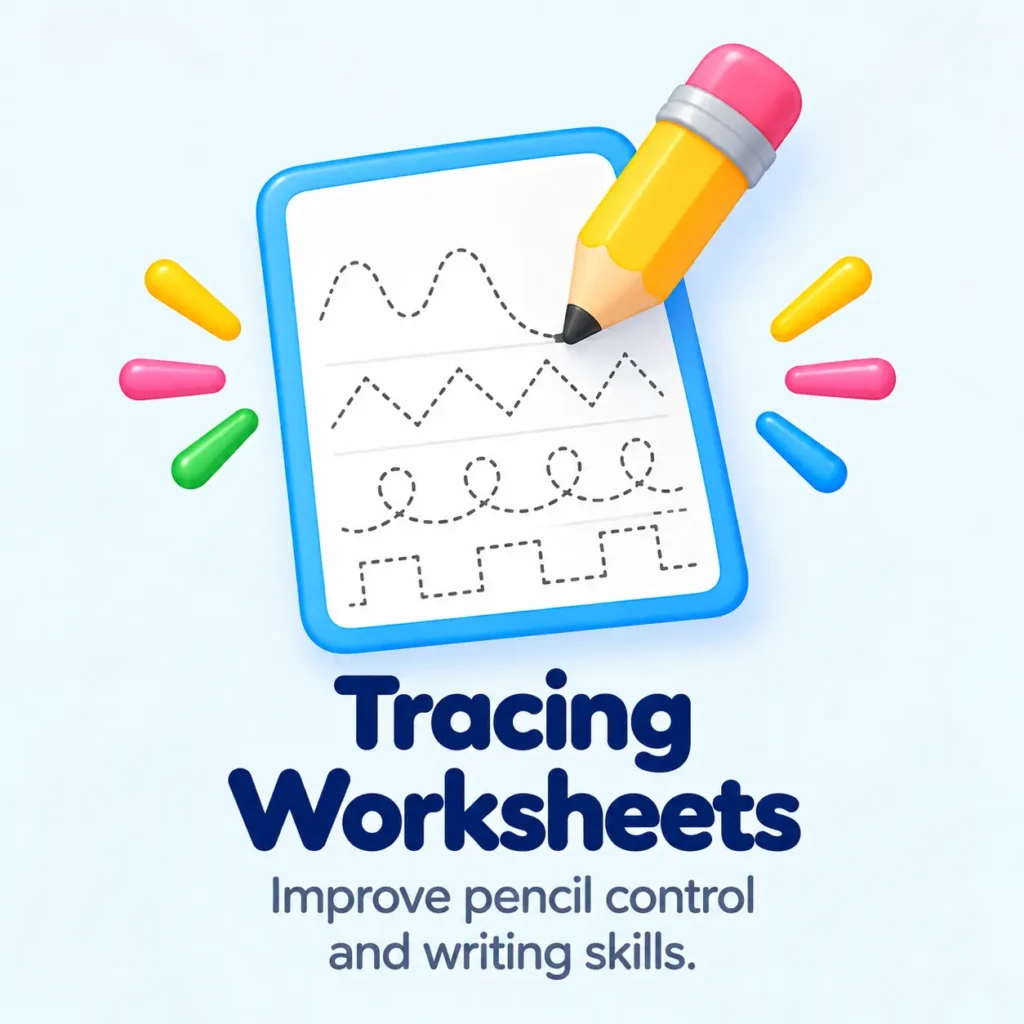
Line tracing is one of the easiest ways to introduce pencil control activities for preschoolers. Children can practice tracing horizontal, vertical, and diagonal lines while learning to keep their pencil within a defined path. You can begin with short, straight lines and gradually introduce longer or more challenging ones. These line tracing activities help children practice moving their pencils in a controlled direction and build the basic movements needed for early writing.
Curve Activities
Curved lines help children practice smooth and controlled pencil movements. Tracing arches, waves, loops, and other curved paths gives preschoolers opportunities to move their pencils in different directions without lifting them from the page. These activities can also help prepare children for the rounded movements used when forming many letters and numbers. Keep the first activities simple, then introduce more complex curves as their pencil control improves.
Zigzag Activities
Zigzag tracing encourages children to change the direction of their pencil while maintaining control. Children can trace simple zigzag lines from one point to another, focusing on following the path without crossing outside the lines. These zigzag tracing activities help children practice quick changes in direction while developing coordination and accuracy. They can also be made more engaging by using fun pictures, familiar objects, or simple themes that encourage children to keep practicing.
Pattern Activities
Tracing patterns gives preschoolers opportunities to practice repeated pencil movements. Simple patterns made from lines, curves, loops, and other shapes can help children learn to repeat movements in a controlled sequence. Start with easy patterns and gradually introduce combinations that require more precise movements. Pattern tracing activities are a useful way to build pencil control while helping children recognize and follow visual patterns.
Shape Activities
Shape tracing allows children to practice moving their pencils around defined outlines. Circles, squares, triangles, rectangles, and other simple shapes give preschoolers opportunities to control their pencil while also reinforcing early shape recognition. Shape tracing activities can be especially useful for children who are beginning to develop both drawing and writing skills. Encourage children to follow the outline slowly rather than focusing on completing the activity quickly. This helps them concentrate on accuracy and controlled movement.
Path Activities
Path-tracing activities encourage children to guide a pencil along a specific route from a starting point to an ending point. These activities help children practice staying within boundaries while controlling the direction of their pencil. You can use simple paths at first and gradually introduce longer or more detailed ones. Adding pictures or familiar themes can make pre-writing activities for preschoolers more engaging and encourage children to complete each path carefully.
Maze Activities
Simple mazes combine pencil control, concentration, and early problem-solving skills. Preschoolers can practice guiding their pencil from maze activities the beginning of a maze to the end while trying to stay within the boundaries. Begin with short and simple mazes that are easy to follow. As children become more confident, you can introduce slightly more challenging paths. This makes maze activities a fun way to practice pencil control while helping children stay focused on the task.
Dot-to-Dot Activities
Dot-to-dot activities encourage children to connect points in the correct order using controlled pencil movements. Following the numbers or sequence of dots requires children to look carefully at the page while guiding their pencil from one point to the next. Once completed, the dots may reveal a simple picture, making the activity more rewarding for young learners. Dot-to-dot activities can combine pencil control, hand-eye coordination, concentration, and early number recognition in one enjoyable activity.
Simple Fine Motor Activities for Home and Classroom
Fine motor activities give preschoolers valuable opportunities to strengthen the small muscles in their hands and fingers while developing coordination, precision, and control. These skills are important for everyday tasks as well as early writing. Including fine motor activities for preschoolers alongside pre-writing practice can help children build the hand strength and finger control needed to hold and move a pencil comfortably.
The best activities do not need to be complicated or require expensive materials. Simple hands-on activities can be included in a preschool routine at home or in the classroom, giving children plenty of opportunities to practice while keeping learning playful and enjoyable
Playdough Manipulation
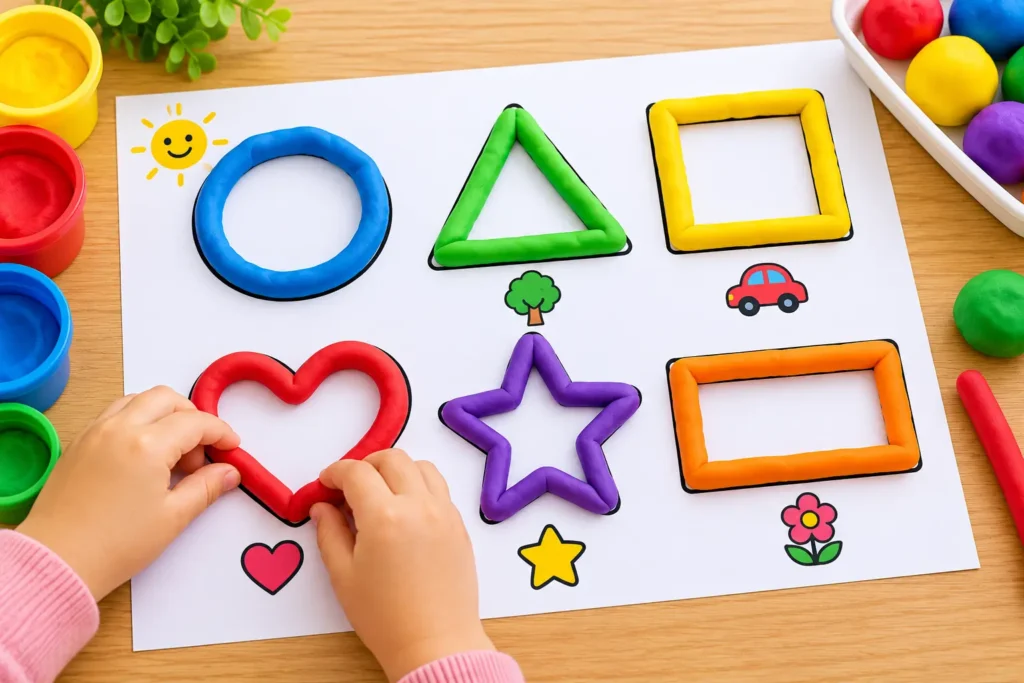
Playing with playdough is a simple and enjoyable way to strengthen children’s hands and fingers. Encourage children to squeeze, roll, pinch, flatten, twist, and shape the playdough using different finger and hand movements. These actions help develop hand strength and improve finger control, which are important for pencil control for preschoolers. Children can also make balls, snakes, letters, shapes, or simple objects with playdough, turning the activity into a creative learning experience
Beading and Threading
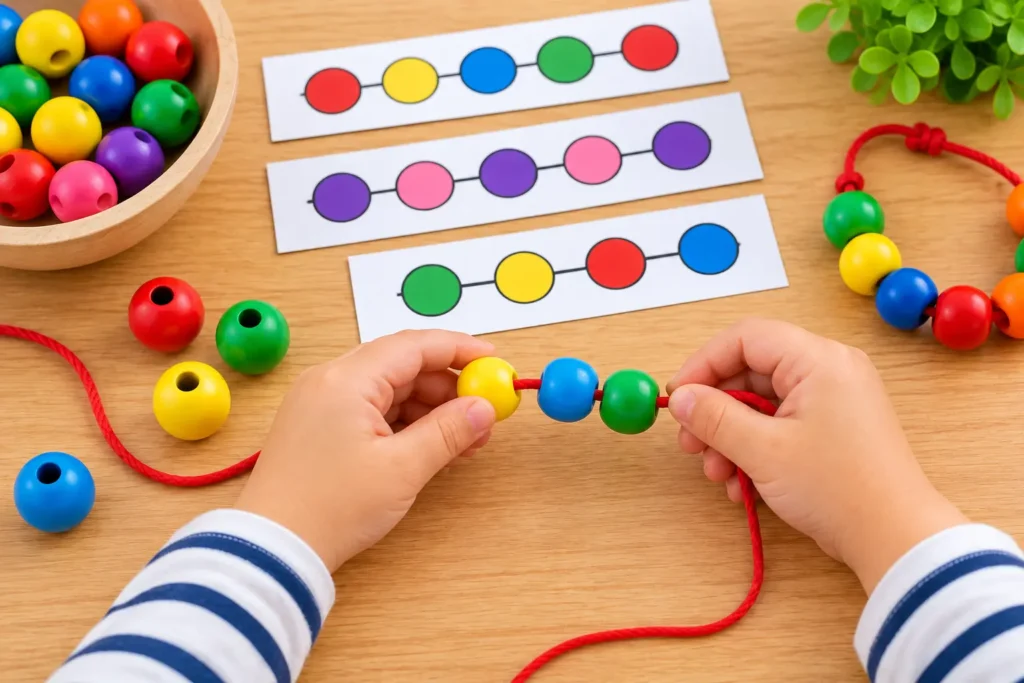
Beading and threading activities encourage children to pick up small objects and carefully guide them onto a string, cord, or shoelace. This requires children to use their fingers precisely while coordinating what they see with how they move their hands. Regular practice can help develop finger strength, precision, and hand-eye coordination. Beading can also be turned into a simple pattern activity by asking children to alternate colors or shapes as they thread the pieces.
Scissor Skills
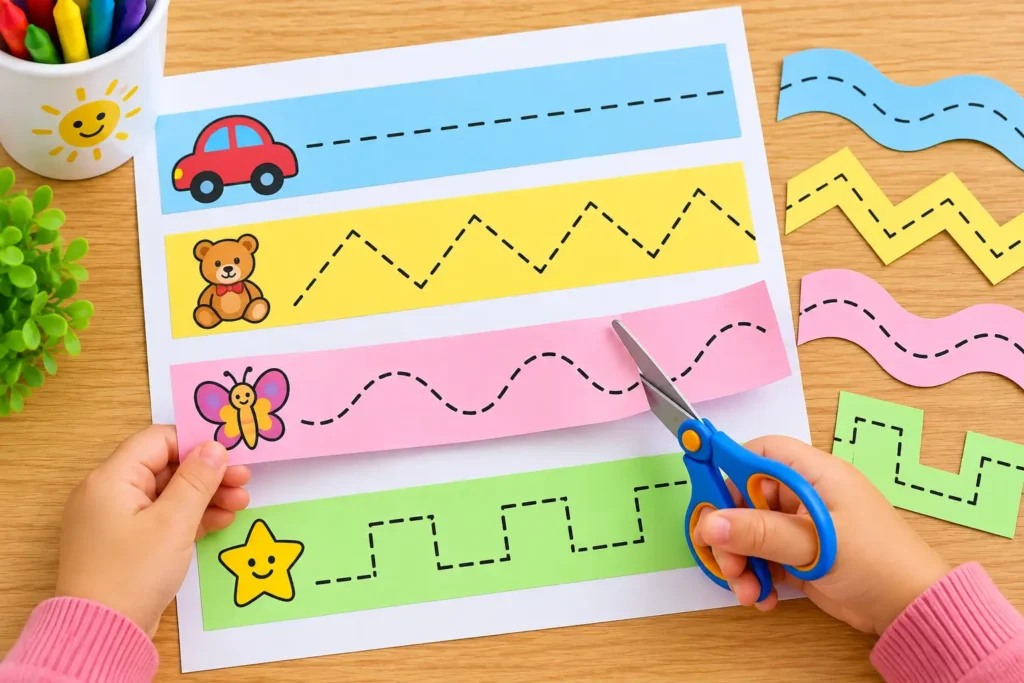
Cutting with child-safe scissors is another useful fine motor activity for preschoolers. It helps children develop hand strength, coordination, and control while learning how to open and close the scissors correctly. Start with simple straight lines and gradually introduce curves, zigzags, and basic shapes as children become more comfortable. Cutting activities can also complement pre-writing skills, as children learn to control their hand movements and follow a defined path. Always use age-appropriate scissors and provide adult supervision.
Using Tweezers
Using child-safe tweezers can help preschoolers develop their pincer grip and improve finger control. Children can use tweezers to pick up pom-poms, craft pieces, or other suitable objects and move them from one container to another. To make the activity more engaging, ask children to sort objects by color, size, or shape as they transfer them. This simple exercise combines fine motor skills activities, concentration, and hand-eye coordination while giving children another opportunity to strengthen the movements needed for pencil control.

Printable Tracing and Fine Motor Worksheets
Printable worksheets give preschoolers a simple and structured way to practice pencil control, fine motor skills, and early writing movements. They are especially useful because children can repeat the same types of movements regularly while gradually becoming more comfortable with controlling a pencil. When combined with hands-on activities, pre-writing worksheets for preschoolers can become a useful part of a balanced learning routine at home or in the classroom.
Benefits of Printable Worksheets
Printable tracing and fine motor worksheets provide focused practice with lines, curves, zigzags, patterns, shapes, paths, and other important pre-writing movements. These activities allow children to practice following lines and staying within defined areas while developing better control and accuracy.
Another benefit is that worksheets are easy to print and use whenever practice is needed. Parents and teachers can choose activities that match a child’s current ability and gradually introduce more challenging exercises. Regular practice with printable tracing worksheets can help preschoolers develop pencil control, hand-eye coordination, concentration, and confidence with early writing activities.
How to Use Worksheets Effectively
Choose worksheets that match your child’s current skill level and begin with simple activities before moving to more challenging patterns. If a child is just starting, begin with basic lines and paths before introducing curves, zigzags, shapes, and more complex patterns. Encourage children to work slowly and focus on following the lines or paths rather than finishing quickly. Praise their effort and progress instead of expecting perfect results. Short, regular practice sessions can be more enjoyable and effective than asking children to complete too many pages at once.
For a well-rounded learning routine, combine worksheet practice with hands-on fine motor activities for preschoolers, such as playdough, threading, cutting, and using tweezers. Parents and teachers can also use printable tracing worksheets and fine motor skills worksheets to give children additional opportunities to practice their developing skills.
Conclusion
Pre-writing activities are an important part of helping preschoolers prepare for early writing. Simple pencil control activities such as line tracing, curves, zigzags, patterns, shapes, paths, mazes, and dot-to-dot exercises give children opportunities to practice the movements they will eventually use to form letters and numbers. Combining pre-writing activities for preschoolers with hands-on fine motor activities such as playdough, threading, cutting, and using tweezers can make learning more enjoyable while strengthening the skills children need for writing. Printable tracing and fine motor worksheets can provide additional structured practice at home or in the classroom. With regular practice, encouragement, and activities suited to their ability level, preschoolers can gradually develop better pencil control, hand-eye coordination, accuracy, and confidence. These early pre-writing skills provide a strong foundation for learning to write letters and numbers.