Introduction
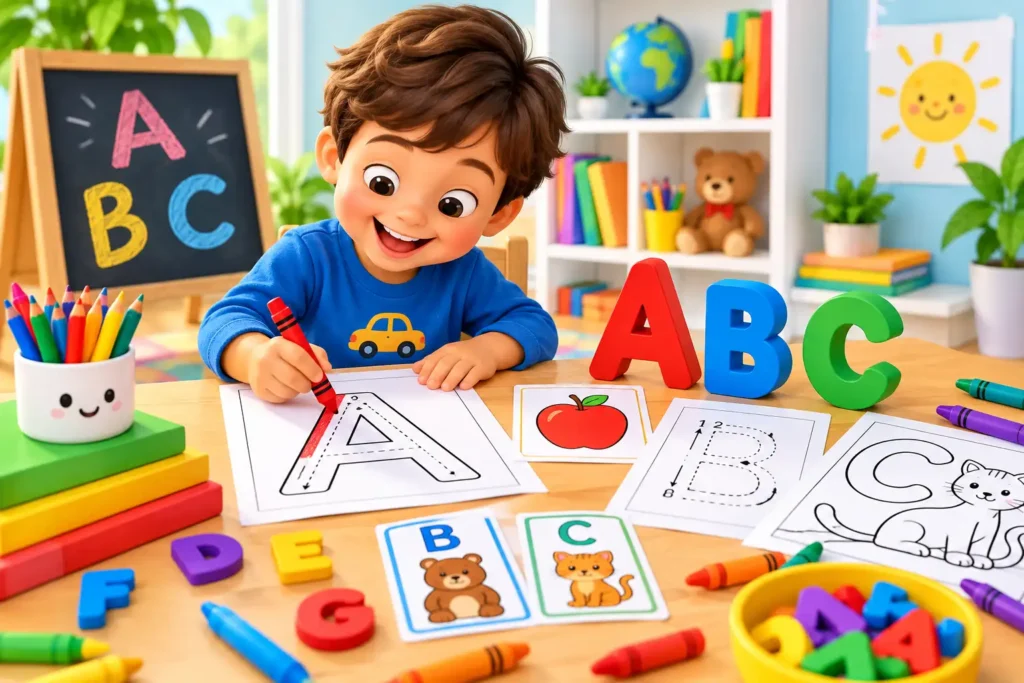
Learning the alphabet is an important milestone in a child’s early education. For preschoolers between the ages of 3 and 5, alphabet activities for preschoolers can make learning letters more fun, engaging, and enjoyable. Simple activities such as tracing, matching, coloring, singing, and letter hunts can help children recognize letters while building early literacy skills.
In this article, we share 5 fun alphabet activities for preschoolers that parents and teachers can use at home or in the classroom. These preschool alphabet activities are easy to set up and give children opportunities to practice letter recognition, uppercase and lowercase letters, and early writing skills through play. You can also use alphabet worksheets for preschoolers to give children extra practice.
Why Is Alphabet Learning Important?
Learning the alphabet is one of the first big steps toward reading and writing. Before children can read simple words or start writing letters on their own, they need to become familiar with the letters, recognize them, and understand that each letter has a name and sound.
For preschoolers, this learning process works best when it feels like play rather than a lesson. Simple alphabet activities for preschoolers give children a chance to see, say, trace, and recognize letters while having fun. With regular practice, children can gradually become more comfortable with the alphabet and build the skills they will need as they begin reading and writing.
Strong alphabet knowledge can help children:
- Develop early reading skills by becoming familiar with letters and their sounds
- Improve writing and handwriting by practicing letter shapes and pencil movements
- Build vocabulary and language skills by connecting letters with familiar words and objects
- Gain confidence in school by becoming more comfortable with early literacy activities
Parents and teachers can introduce letters in many simple ways. Preschool alphabet activities such as tracing letters, matching uppercase and lowercase letters, coloring alphabet pictures, singing songs, and looking for letters around the house can make practice more enjoyable.
You can also use alphabet worksheets for preschoolers when children need a little extra practice. Combining worksheets with games, songs, books, and everyday activities keeps learning varied and gives children plenty of opportunities to see and use letters.
The goal is not to make preschoolers memorize the entire alphabet as quickly as possible. What matters more is giving them regular, positive opportunities to learn about letters at a pace that feels comfortable for them. Over time, these small moments of practice can help build a strong foundation for reading and writing.
Activity 1: Alphabet Tracing Worksheets
Alphabet tracing worksheets are a simple way to help preschoolers become familiar with letters while practicing how to form them. Tracing gives children a clear outline to follow, so they can focus on the shape and direction of each letter without having to write it completely on their own.
Alphabet tracing worksheets can help children:
- Learn the correct shape of each letter
- Develop fine motor skills and pencil control
- Practice holding and moving a pencil
- Build familiarity with uppercase and lowercase letters
- Develop the muscle memory needed for early writing
How to use alphabet tracing worksheets
Start with uppercase letters, as many children find their shapes easier to recognize and trace. Once your child becomes comfortable with uppercase letters, introduce lowercase letters gradually.
There is no need to practice the entire alphabet in one sitting. Try working on 2 to 3 letters at a time and repeat them over several days. You can also say the letter name and its sound while your child traces it.
For extra practice, let your child trace a letter several times and then try writing it independently. You can find free printable alphabet tracing worksheets on MySchoolPrint for easy practice at home or in the classroom.
Activity 2: Letter Matching Games
Letter matching games are a fun way to help preschoolers recognize letters and understand the difference between uppercase and lowercase forms. Instead of simply looking at letters on a worksheet, children get to handle the cards, search for matches, and learn through play.
Materials needed
- Letter cards with uppercase and lowercase letters
- A flat surface to lay the cards out
How to play
Spread the cards face up on a table and ask your child to find the matching uppercase and lowercase letters. For example, they can match A with a, B with b, and so on.
Once your child understands the game, make it a little more challenging by placing the cards face down. Let your child turn over two cards at a time and try to remember where each letter is. You can start with just a few pairs and add more as your child becomes comfortable.
Benefits of letter matching
- Improves letter recognition and memory
- Helps children understand uppercase and lowercase letters
- Encourages concentration and focus
- Makes letter learning interactive and fun
These simple letter recognition activities can be played again and again, making them a useful addition to your preschool learning routine.
Activity 3: Alphabet Coloring Pages
Children love to color, so why not combine coloring time with letter learning? Alphabet coloring pages give preschoolers a creative way to become familiar with letters while also practicing their coloring and fine motor skills.
An alphabet coloring page may include:
- A large uppercase or lowercase letter
- A picture that begins with that letter
- Simple outlines for children to color
For example, an A page might feature an apple, while a B page could show a ball. Seeing the letter together with a familiar picture helps children make a connection between the letter and the word it represents.
You can also say the letter and the picture name while your child colors. For example, “A is for apple” or “B is for ball.” These small conversations can turn coloring time into a simple letter learning activity.
Free alphabet coloring worksheets can be especially useful when children need a relaxed activity that combines creativity with alphabet practice. MySchoolPrint offers printable alphabet coloring worksheets that parents and teachers can use at home or in the classroom.
Activity 4: Sing the Alphabet Song
Songs are a natural part of early childhood learning. The familiar alphabet song gives children a fun way to hear the letters in order and repeat them several times without making practice feel like a lesson.
Tips for using the alphabet song
- Sing slowly so children can hear each letter clearly
- Point to the letters on an alphabet chart while singing
- Repeat the song regularly
- Try different versions to keep the activity interesting
- Encourage children to sing along rather than simply listening
You can also combine the song with movement. Ask children to clap, tap, or point to each letter as it is sung. This can make the activity more interactive and help keep young children engaged.
Alphabet songs work especially well when combined with other preschool alphabet activities, such as letter matching, tracing, coloring, and letter hunts. This gives children different ways to see, hear, and practice the same letters.
You can also find alphabet songs on YouTube with animations and visuals that make the experience more engaging for young learners.
Activity 5: Alphabet Letter Hunt
An alphabet letter hunt is a fun, active way to help preschoolers practice recognizing letters while moving around. It can be especially useful for children who enjoy hands-on activities and find it difficult to sit for long periods.
How to set up a letter hunt
- Write letters on small cards or sticky notes
- Hide the cards around a room or safe outdoor area
- Give your child a basket or container for collecting the cards
- Ask them to name each letter as they find it
You can begin with just a few familiar letters and gradually add more. For example, ask your child to find the letters A, B, C, and D first. Once they become comfortable, include more letters from the alphabet.
You can also make the game more challenging by asking children to find only uppercase letters, only lowercase letters, or a specific letter that you call out.
For an extra learning activity, ask your child to think of a word that begins with each letter they find. This turns the letter hunt into a simple alphabet recognition activity while also introducing children to new words.
Tips for Teaching the Alphabet at Home
Learning letters doesn’t have to mean sitting at a table with flashcards or worksheets every day. Young children often learn best when alphabet practice becomes part of their normal play and daily routine. Here are a few simple tips that can help make alphabet learning for preschoolers more enjoyable and effective.
Be Consistent
A little practice every day is usually easier for a preschooler than one long learning session once a week. Even 10 to 15 minutes of alphabet practice can give your child regular opportunities to recognize and talk about letters.
You don’t need to cover several letters in one session. Choose a few letters your child is learning and repeat them through different activities such as tracing, coloring, matching, or reading.
Make It Fun
If your child is tired or frustrated, it’s okay to take a break. Alphabet learning should feel enjoyable rather than like a test.
Try mixing different alphabet activities for preschoolers, such as songs, games, coloring pages, letter hunts, and simple tracing activities. Changing the activity can help keep children interested and give them different ways to practice the same letters.
Use Everyday Opportunities
You don’t need special materials every time you want to practice letters. Point out letters on signs, food packaging, storybooks, labels, and other things you see during the day.
For example, while reading a book, ask your child to find a particular letter on the page. When you are at the store, you can point out a familiar letter on a package. These small moments can turn everyday activities into natural letter recognition activities.
Celebrate Progress
Every child learns at their own pace, so focus on progress rather than perfection. Praise your child when they recognize a new letter, remember a letter sound, or successfully complete an activity.
Positive encouragement can help children feel more confident and willing to keep trying when they come across letters that are still unfamiliar.
Use Printable Worksheets
Free printable alphabet worksheets can be a helpful resource when your child needs structured practice. You can choose activities based on what they are currently learning, such as alphabet tracing, letter matching, or alphabet coloring.
Try combining worksheets with hands-on games, songs, books, and other preschool alphabet activities. This keeps practice varied while giving children plenty of opportunities to see, recognize, and use letters.
This version adds useful content without making the section feel artificially long, and it naturally strengthens the article’s coverage of alphabet activities for preschoolers, free printable alphabet worksheets, and letter recognition activities.
Conclusion
Teaching the alphabet to preschoolers does not have to be difficult or boring. When children get to learn through fun alphabet activities, they can practice recognizing letters, learning letter sounds, and becoming more comfortable with uppercase and lowercase letters in a relaxed way.
Simple activities such as alphabet tracing worksheets, letter matching games, alphabet coloring pages, songs, and letter hunts give children different ways to practice the alphabet. You don’t need to do all of them every day. Choose activities your child enjoys and give them regular opportunities to practice.
Parents and teachers can also use free printable alphabet worksheets to add structured practice at home or in the classroom. Combining worksheets with games, books, songs, and everyday letter activities can keep learning interesting and engaging. Try these 5 fun alphabet activities for preschoolers and see which ones your child enjoys the most. With regular practice, encouragement, and plenty of positive experiences, children can build a strong foundation for early reading and writing.